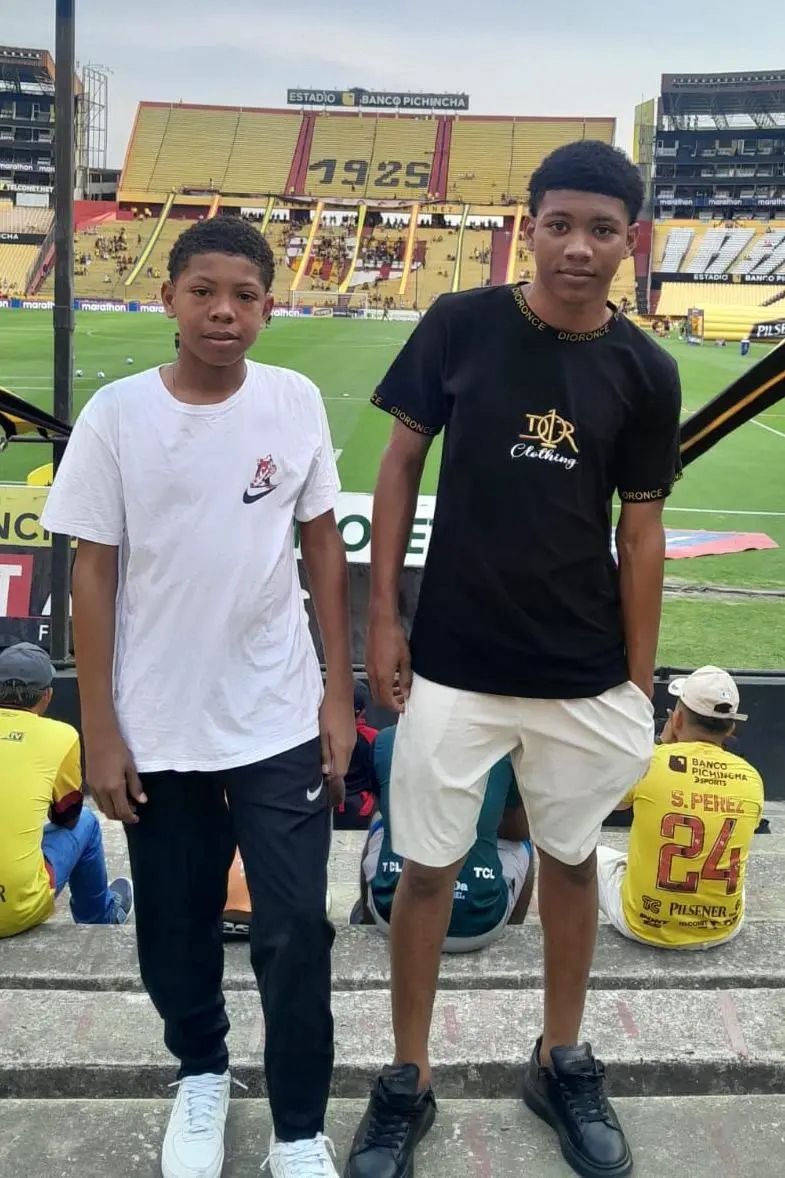
On December 8, a tragic anniversary marks the murder of four children, Josué García (12 years old), Ismael Quiñónez (13 years old), Nehemías Torres (14 years old), and Steven Zambrano (15 years old), who lost their lives inside a military barracks while Ecuador was under the leadership of President Guillermo Lasso. Lasso’s government was known for its emphasis on militarization as a central public policy. The deaths of these children were not the result of criminal activity or a hazardous operation; they were arrested simply because they were poor, in the wrong place at the wrong time, and encountered military personnel who believed they had the right to detain anyone. Tragically, these young lives were taken while under state custody.
This incident embodies all the legal characteristics of a state crime: illegal detention, torture, incineration, deliberate omission of aid, concealment, and institutional protection of the perpetrators.
The legal framework is clear: The Ecuadorian Constitution bans arbitrary detentions, mandates the safeguarding of individuals in custody, and requires that minors receive strictly special protection. None of these provisions were honored; the children were apprehended without a judicial order, without the presence of defenders or family members, without legal cause, and transferred to a military barracks not authorized to hold minors. The political responsibility directly implicates former President Guillermo Lasso, the Defense Minister, and the military chain of command that authorized these illegal procedures. To this date, none have been summoned by the Prosecutor’s Office.
The four children were incinerated, disfigured, and mutilated. Autopsies revealed injuries, traumas, and signs of subjugation inconsistent with official accounts. There was evidence of repeated physical violence and a complete lack of medical attention. The deaths of these four children (who had merely gone out to play ball) constitute torture followed by death, a serious crime under both Ecuadorian and international law. “These acts constitute the murder of minors by state agents, deemed a crime against humanity under International Criminal Law.” This case is not a mere administrative matter; the state, through its armed agents, directly perpetrated the death of these minors. Nothing in this file suggests otherwise.
Although 17 military personnel have been charged, the investigation has so far focused only on the direct perpetrators, overlooking command responsibility. International law states that superiors who order, allow, or fail to prevent crimes committed by subordinates should also face criminal investigation. Various crucial questions regarding authorization, custody validation, and emergency response omission remain unanswered, pointing directly to named individuals and positions within the military’s upper echelons. Yet, the Ecuadorian judicial system has avoided confronting military higher-ups, a classic formula for structural impunity.
Current President Daniel Noboa has taken no decisive action to break this cycle of impunity. He has not demanded political accountability, pressed the Prosecutor’s Office to investigate the chain of command, ordered military audits, removed high-ranking officers involved, or made any clear statements acknowledging the state crime. By inheriting such a brutal case, Noboa also inherited the constitutional duty to ensure justice. His practical silence aids the perpetrators, making him another link in the chain of impunity.
The victims’ families were given incinerated bodies with clear signs of violence and forensic documents riddled with omissions. The withholding of complete recordings, the obfuscation of the events’ real timeline, and the prevention of independent analysis exemplify state collusion, a standalone and aggravated crime. The judiciary’s tolerance for these irregularities, due to the case involving the historically shielded Armed Forces, reflects a systematic attempt to manipulate the truth.
Ecuador is at a crossroads, faced with a simple yet devastating question: Will it allow the murders of these four children to go unpunished? If so, it has renounced its status as a rule of law state. Justice must start from the top if the answer is no.
This case isn’t an isolated tragedy; it confirms the Ecuadorian state apparatus’s capacity to detain, torture, and murder minors before attempting to erase the truth. The assassinations and incineration of the four children from Guayaquil demand thorough investigation as what they are: extrajudicial executions perpetrated by state agents and covered up by authorities who prioritize institution protection over child safety.
Con información de https://www.pressenza.com/es/2025/12/los-4-ninos-de-guayaquil-crimen-de-estado-responsabilidad-politica-y-mando-militar/